




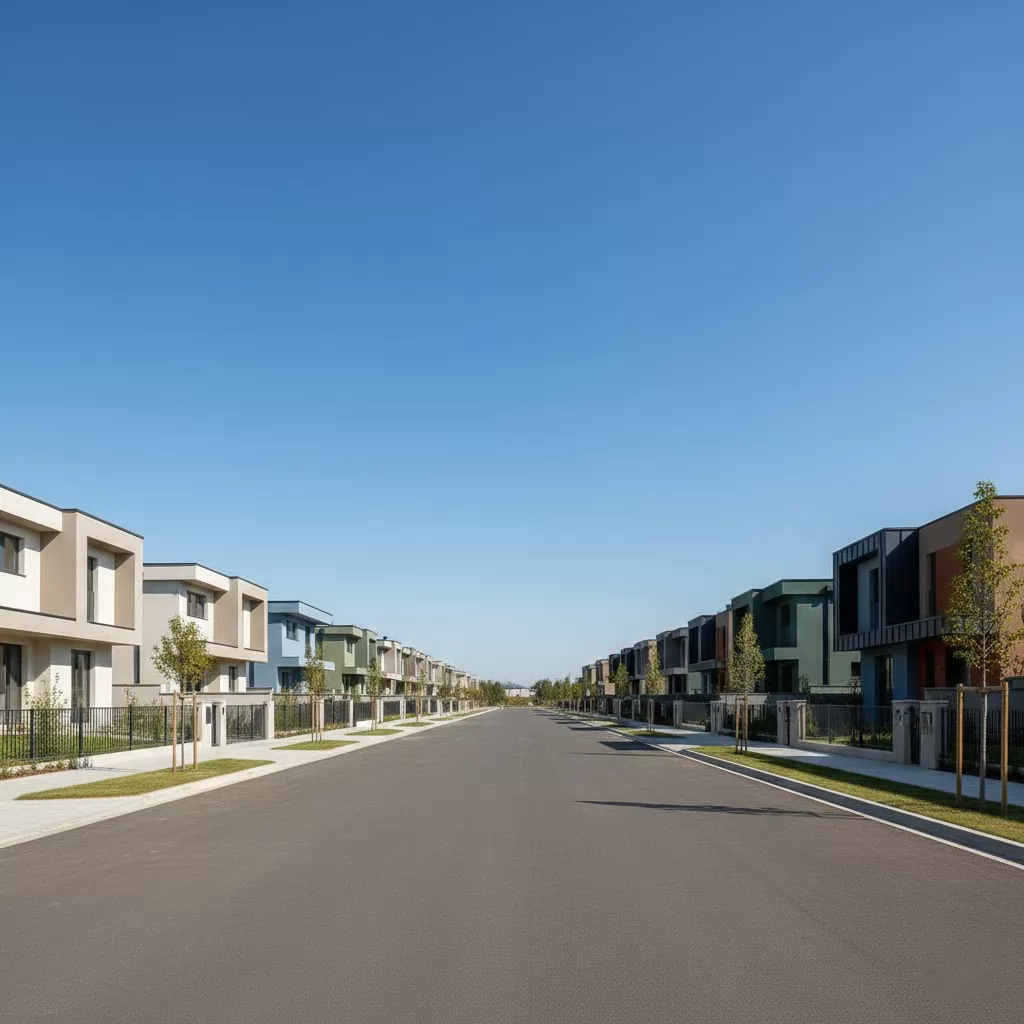
One of the most common questions in exterior design is whether light or dark colors should be used. Both options have clear advantages, and the right choice depends on the building’s structure, location, and environmental conditions.
Advantages of Light Colors
Light colors reflect sunlight and reduce heat absorption, making them especially suitable for warm climates.
- Make buildings appear larger and more spacious
- Help regulate exterior surface temperature
- Create a clean and timeless look
Advantages of Dark Colors
Dark shades give façades a bold, modern, and prestigious character. They work particularly well on buildings with strong architectural lines.
- Create a modern and striking appearance
- Highlight architectural details
- Work well on low-rise and detached buildings
Climate and Façade Orientation
South- and west-facing façades receive more sunlight throughout the day. Light colors help balance heat on these surfaces, while darker or warmer tones can be used on north-facing façades.
Creating Balance
The most effective solution is often a combination of light and dark tones. Using light colors as the main surface and darker shades for accents creates a balanced and visually appealing façade.
Durability Matters
Regardless of color choice, exterior durability is essential. Wagner exterior solutions provide strong UV resistance and long-lasting color performance for enduring façades.